Beyond Clean Water: Dignity, Safety & Opportunity
A latrine can change a woman's life. A well can change an entire community.
When we think about the impact of clean water, we often think about drinking, cooking, and preventing disease. But access to clean water and proper sanitation means so much more, particularly for women and girls in rural African communities.
For many women and girls, the absence of a private, safe place to use the bathroom is a daily challenge that affects their health, safety, dignity, and freedom.
In communities without proper sanitation, women and girls may have to walk into fields or surrounding bushland to find a place to relieve themselves. This can mean sacrificing privacy, exposing themselves to danger, and living with the constant anxiety of not having a safe and sanitary option.
At Global H2O, we believe everyone deserves access to clean water and basic sanitation. That's why our work goes beyond building wells. We also build latrines that help transform the lives of the people and communities we serve.
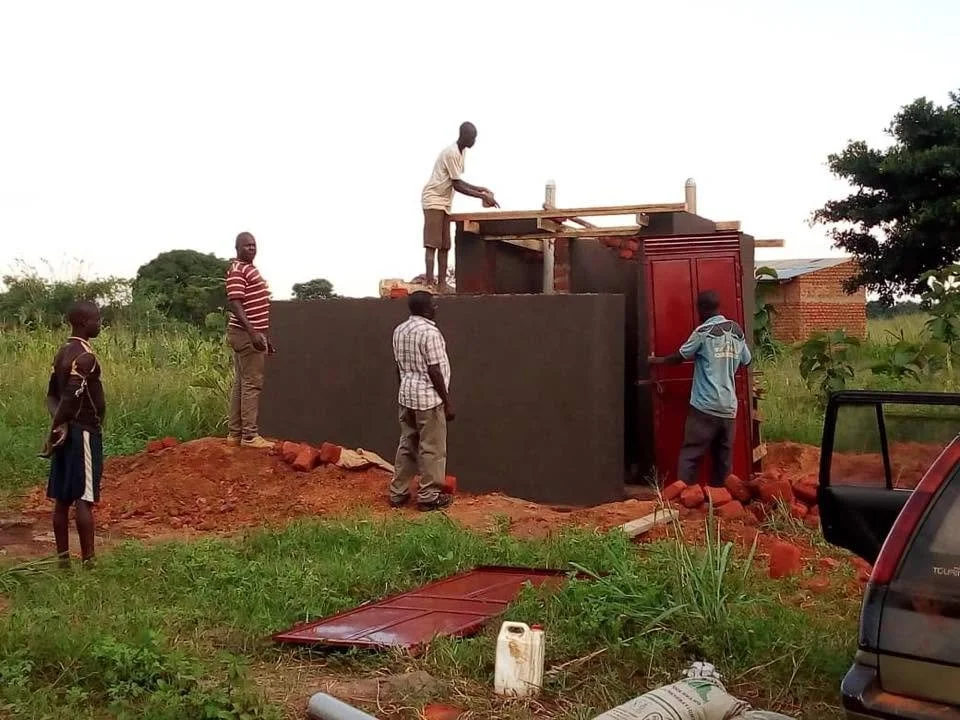
One of our latrines in Uganda during construction.
Restoring Dignity, Privacy and Safety for Women
The impact of a latrine goes far beyond providing a place to go to the bathroom.
For women and girls, access to a private and sanitary latrine can mean:
Greater personal safety: Women and girls no longer have to venture away from their homes or communities, often after dark, in search of a secluded place.
Privacy and dignity: A secure, private facility allows women to meet a basic human need without fear, embarrassment, or exposure.
Better menstrual hygiene: Access to sanitation and water gives girls and women a more appropriate environment to manage menstruation with cleanliness and dignity.
Improved health: Proper sanitation helps reduce exposure to human waste and the spread of dangerous bacteria, parasites, and waterborne diseases.
More opportunities for girls: When schools have appropriate sanitation facilities, girls are better able to attend school consistently, including during menstruation.
These are not small improvements. They can change how a woman experiences every single day.
Why Wells and Latrines Belong Together
Clean water and proper sanitation are two sides of the same solution.
A well provides the water a family needs to drink, cook, bathe, wash clothes, and maintain personal hygiene. A latrine provides a safe and sanitary place to manage human waste.
Together, they create a healthier living environment and help break the cycle of preventable disease.
Consider what happens when a community has access to both:
Clean Water
Safe water for drinking and preparing food.
Water for bathing and personal hygiene.
Water for washing hands after using the latrine.
Less time spent walking long distances to collect water.
Proper Sanitation
A private and safer place for women and girls.
Reduced exposure to human waste.
Improved hygiene and disease prevention.
Greater dignity and confidence for families.
The Combined Impact
Healthier families and stronger communities.
More time for women to care for their families, pursue education, and participate in economic activities.
Better conditions for girls to attend and remain in school.
A cleaner, safer environment for future generations.
A well without proper sanitation leaves an important part of the health equation unfinished. A latrine without access to water makes it harder to maintain proper hygiene. By investing in both, we help communities build a stronger foundation for a healthier future.
The Impact Extends Across Generations
Women are often the backbone of their families and communities. They carry an enormous responsibility for collecting water, preparing meals, caring for children, and maintaining their households.
When a community gains access to a nearby well, women and girls can spend less time walking to collect water and more time on the things that matter to them.
When that same community gains access to proper sanitation, they gain something equally important: safety, privacy, and dignity.
Girls have a better opportunity to stay in school. Mothers have a healthier environment in which to raise their children. Families have a better chance of avoiding illnesses associated with unsafe water and poor sanitation.
These improvements can have a lasting impact, extending well beyond the initial construction of a well or latrine.
A well brings life. A latrine brings dignity. Together, they create opportunity.